
April shows bring May flowers, the saying goes. But they also bring something else – an opportunity to evaulate fields for an invisible foe: leaking nutrients.
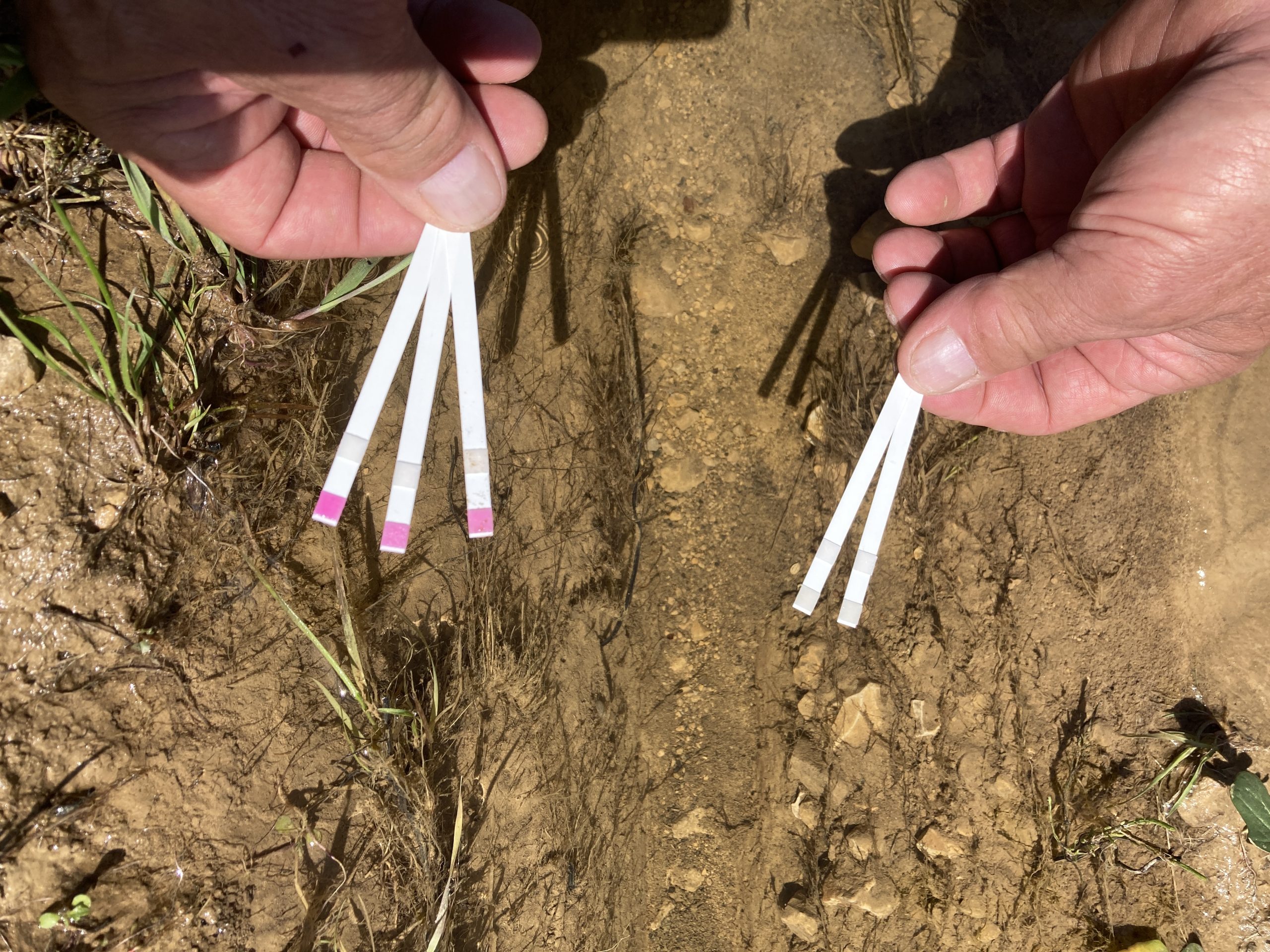
This spring, Fields of Sinsinawa’s soil caretaker, Rick Bieber, used a few simple nitrate test strips to do a quick, down-and-dirty evaluation of the water coming out of a few fields. One place in particular was of interest. On one side of the road was Field A containing our winter wheat field that had been sown with a big-diverse cover crop last fall (the cover crop winter killed); across the road, Field B had a monoculture of fall-sown rye. Both fields had been corn in 2025.
From the road, the fields looked a lot alike. They were of similar slope, both had decent water infiltration, and the water running in the adjacent ditches appeared clear to the naked eye. A quick dip of the nitrate strips revealed a significant difference, though. The nitrate reading of Field A was close to zero, but the reading of Field B was close to 10 parts per million (ppm).
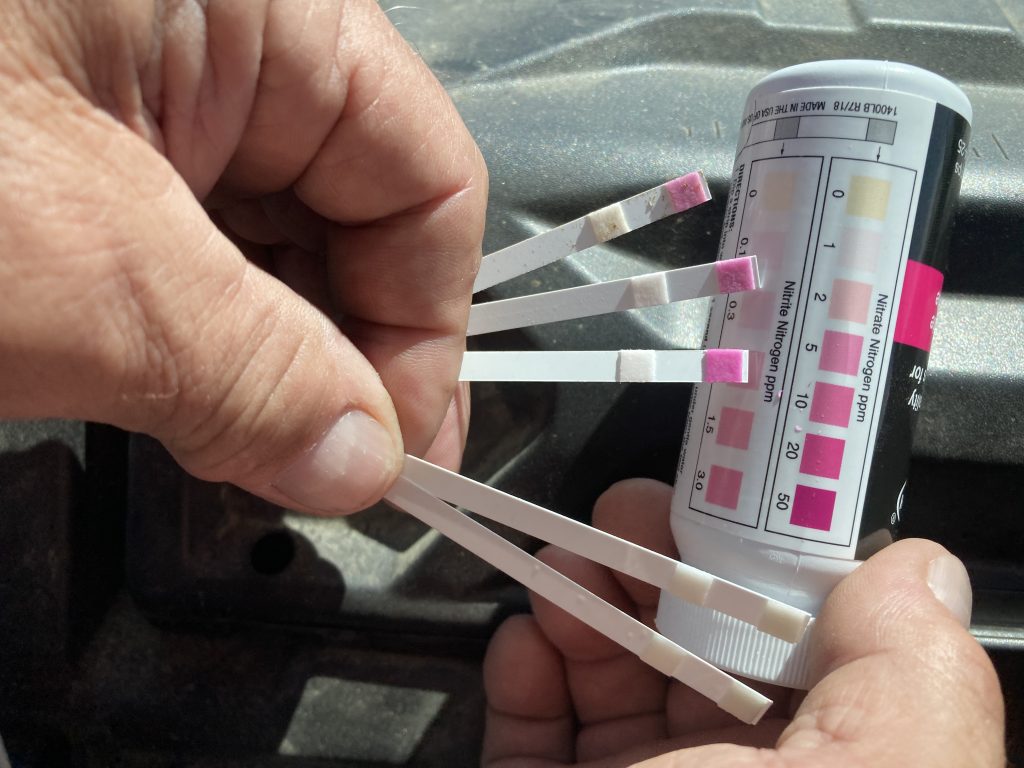
That’s a big difference! After all, the EPA has set a maximum contaminant level of 10 ppm for nitrates in drinking water.
But the fields seemed so similar, so, what’s going on?
“These tests were taken three days after a rainfall event, so the water in the ditch wasn’t surface runoff but rather infiltration leakage,” Rick says. “The diversity of the cover crops feeds the diverse ecosystem underground, keeping the soil’s biological ecosystem alive. And the life within the soil is what holds the nutrients in place. Lack of life in the soil means less holding capacity for both water and nutrients. Functioning soils don’t leak nutrients.”
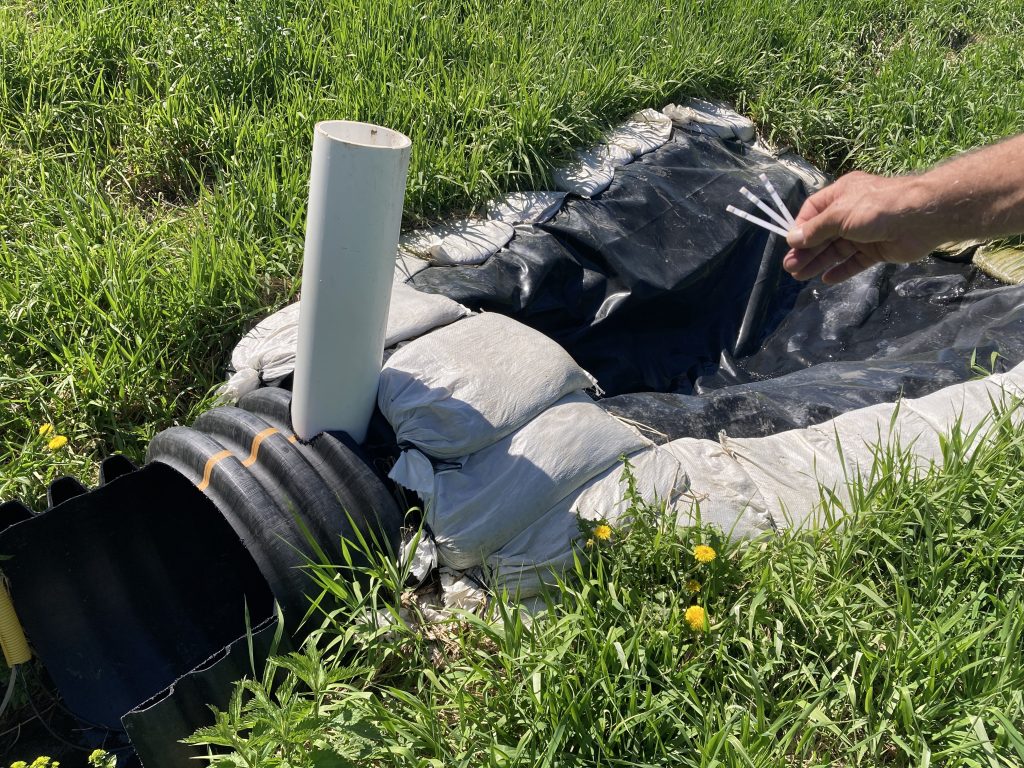
This test isn’t the be-all, end-all of water testing, of course, but as a quick and easy way of monitoring the water quality impacts of different farming practices, it’s pretty handy. We encourage every farmer to keep a bottle of these test strips in their pickup for regular monitoring purposes. Want us to send you a bottle? Email hello@fieldsofsinsinawa.org, ask for a package of nitrate strips, and we’ll send them your way!


